Fifteen places to see in Ujjain
The shrines, the ghats, the observatory and the caves, grouped by where they actually are, so you can see what fits a day and what needs two.
Itineraries · 10 min read · Updated
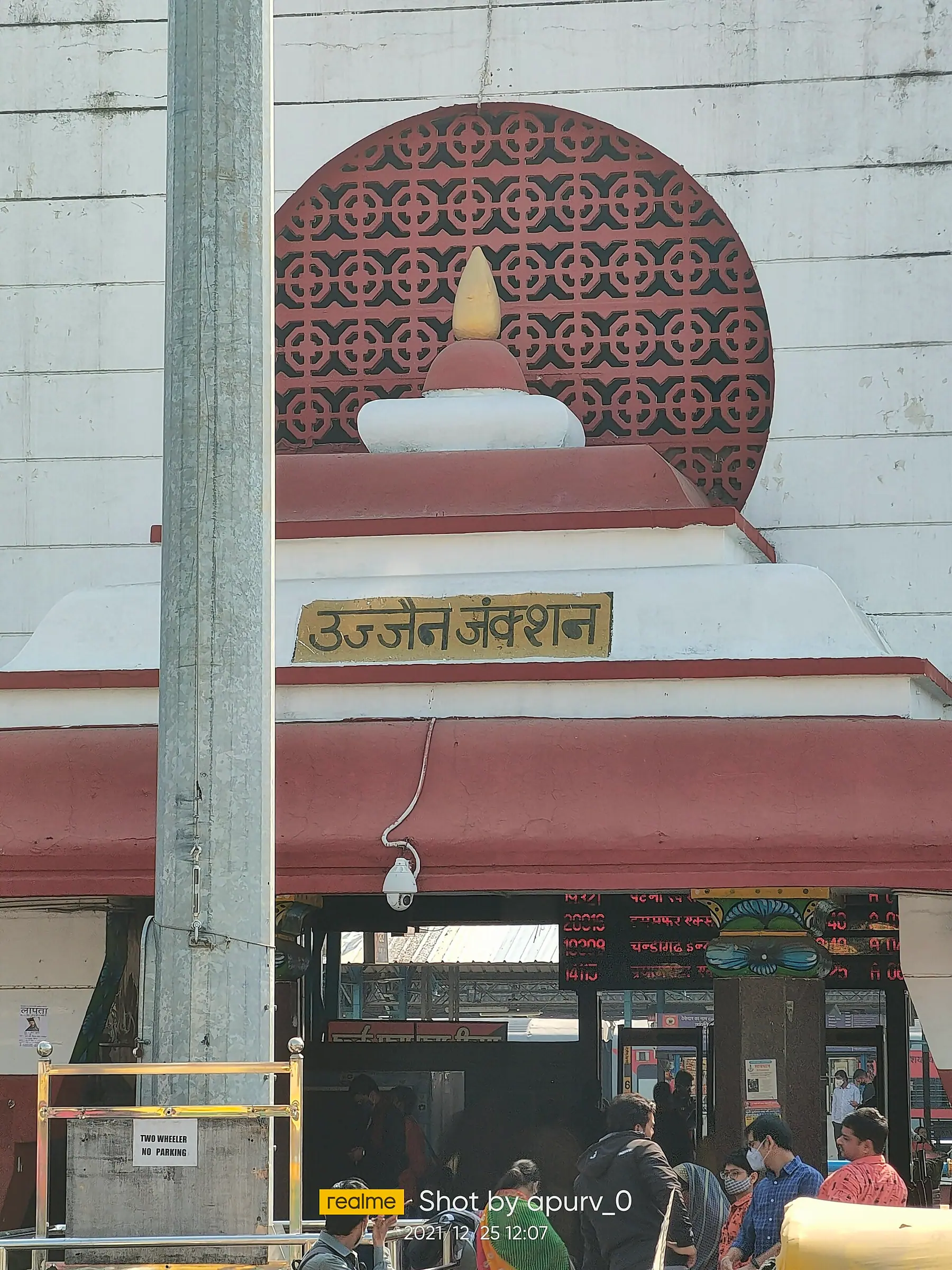
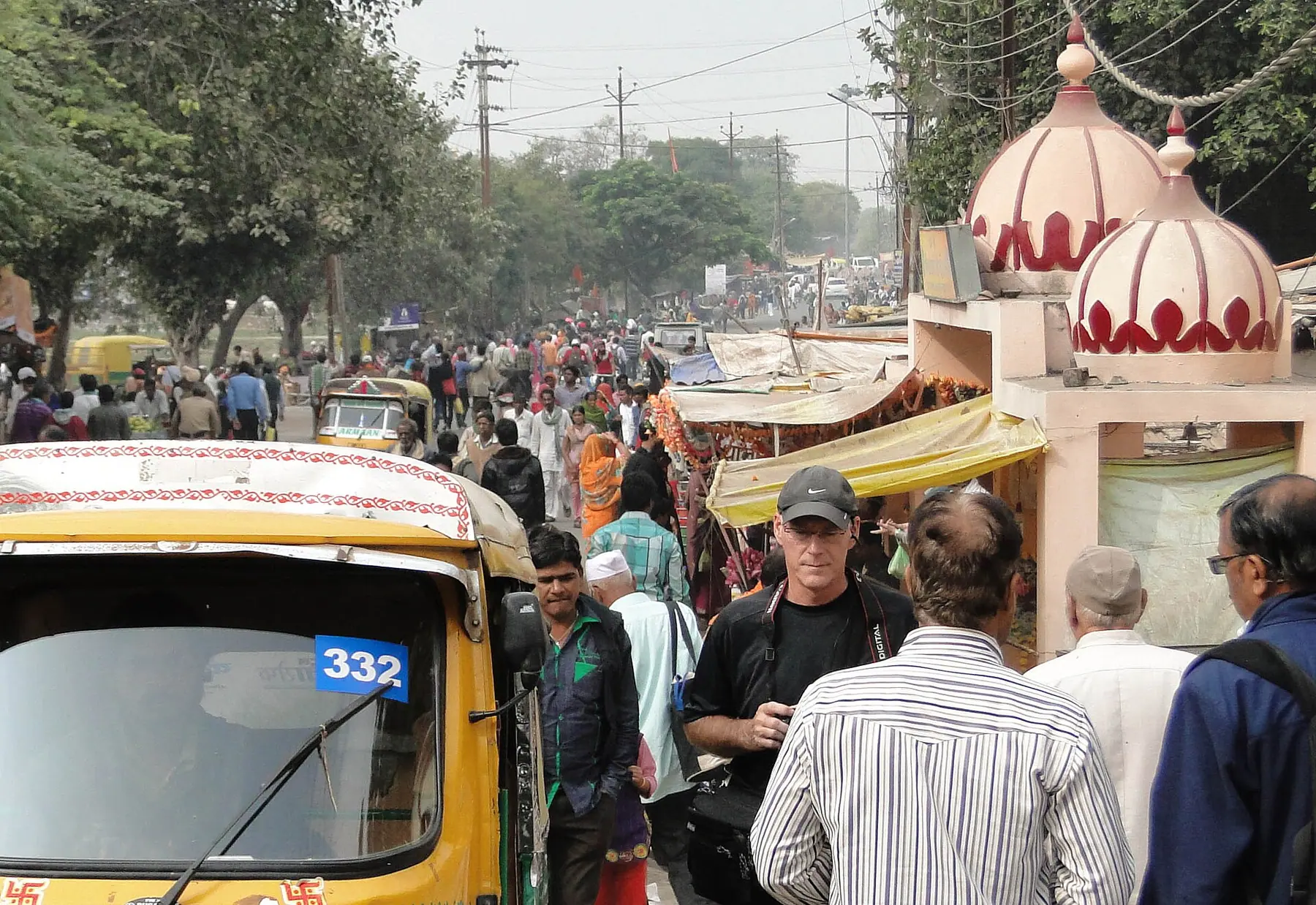
Almost everybody comes to Ujjain for Mahakaleshwar and then finds they have a day and a half left over. The city rewards that: it is one of the seven Mokshadayini Sapta Puris, it has been a seat of astronomy for centuries, and its shrines are spread across both banks of the Shipra rather than gathered in one compound. The list below is grouped by where things are, because that is what decides your day, not how famous they are.
In the old city, within a walk
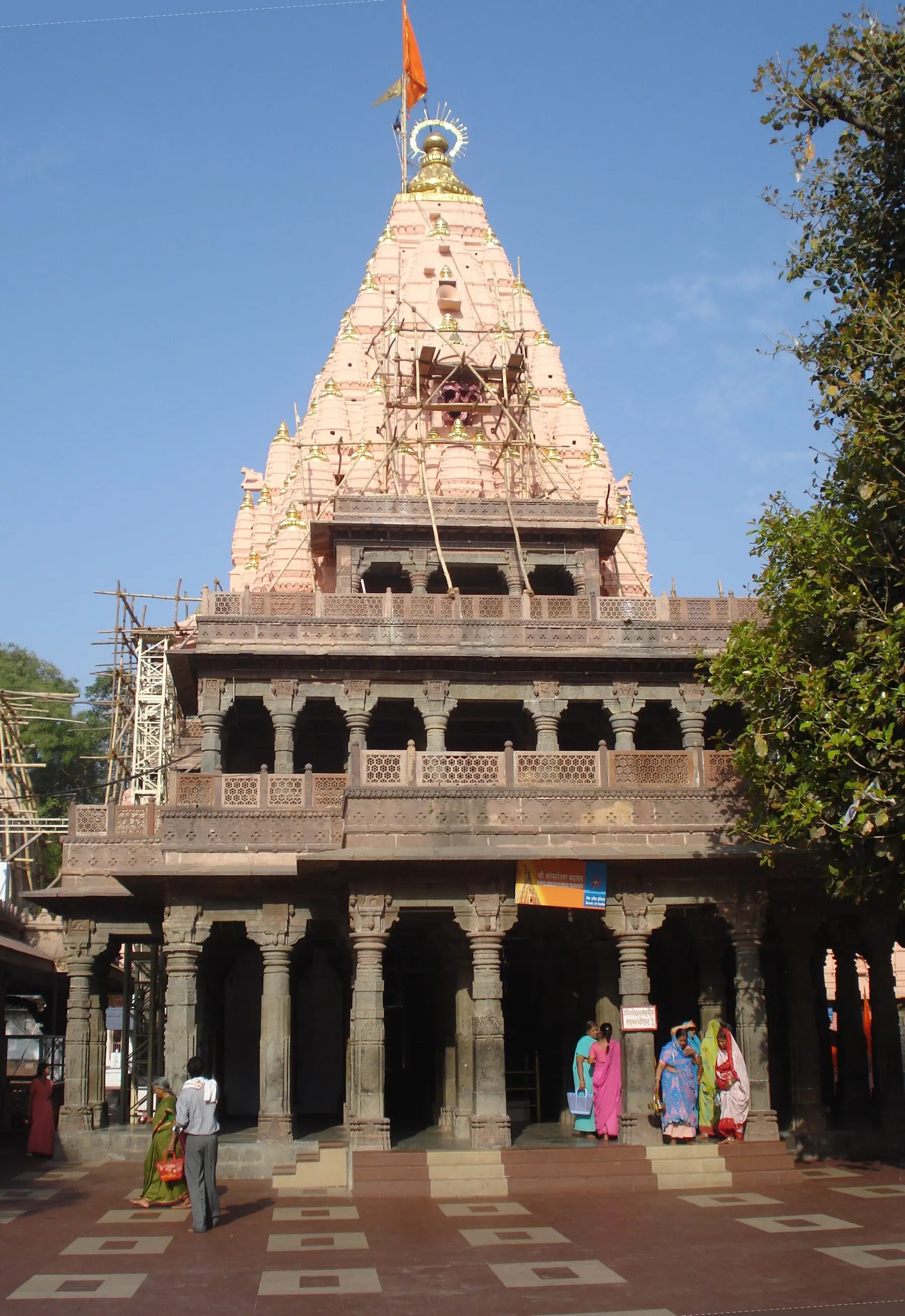
- Mahakaleshwar Jyotirlinga: the underground sanctum, and the Bhasma Aarti before dawn. Everything else is planned around it.
- Mahakal Lok: the sculpted corridor on the approach. Half an hour, flat ground, and best after dark when it is lit.
- Chaubis Khamba: the twenty-four-pillared gate of the old temple wall, with the shrines of Mahalaya and Mahamaya. A few minutes on foot.
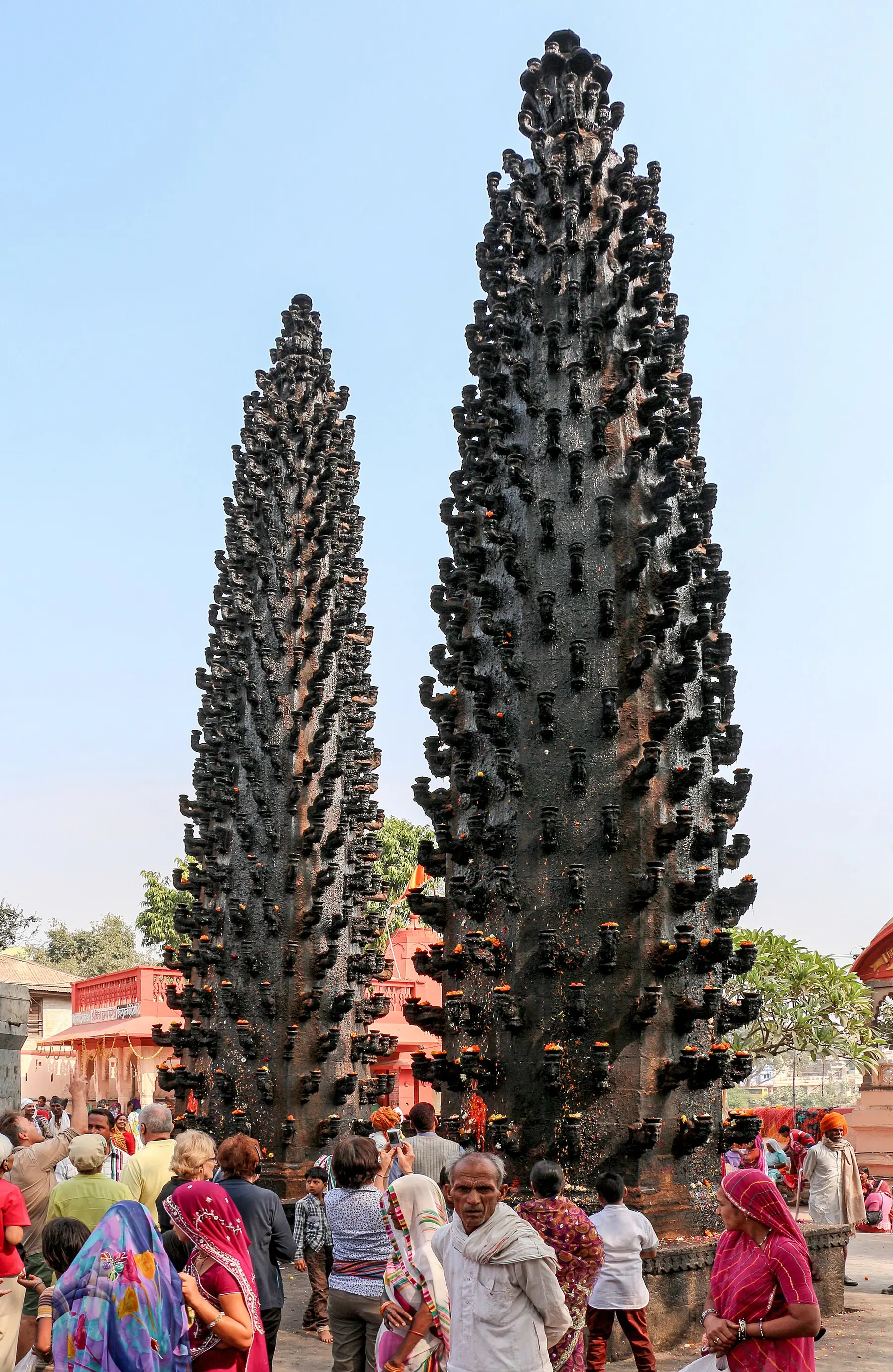
- Harsiddhi Mata: a Shakti Peetha, and the two tall black deep stambhs in its courtyard, set with hundreds of lamps and lit on festival evenings.
- Gopal Mandir: a nineteenth-century Krishna temple in the bazaar, Maratha-built, with silver doors.
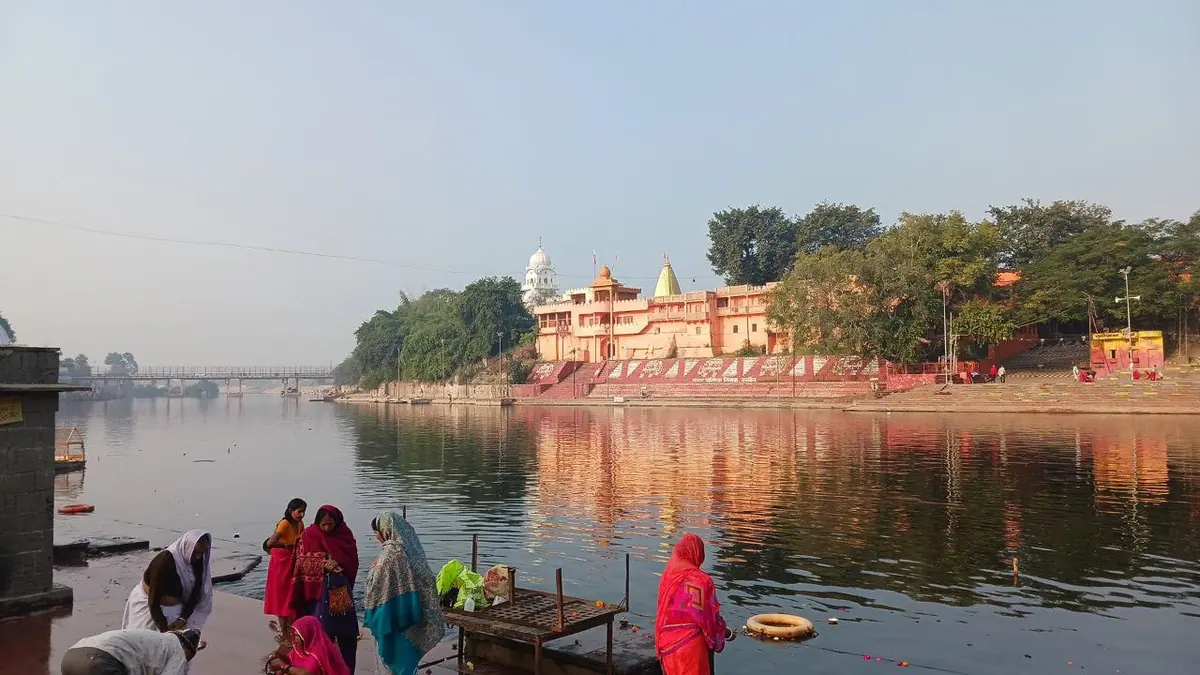
- Ram Ghat: the oldest bathing ghat on the Shipra, and where most riverside rites are performed. Go at first light.
Across the Shipra
- Kal Bhairav: the guardian of the city, at Bhairavgarh, where madira is offered to the deity. A custom found at very few other shrines.
- Bhartrihari Caves: rock-cut cells above the river, named for the poet-king who is said to have renounced his throne and meditated here.
- Mangalnath: held in the Puranas to be the birthplace of Mangal, and the point from which Ujjain’s astronomers took the prime meridian. The Mangal Dosh rites are performed here.
- Siddhavat: the ancient banyan on the river bank, where the rites for ancestors are done.
- Navagraha Mandir, at Triveni: the nine planets, on the ghat at the confluence. Busy on new-moon days.
A short drive out
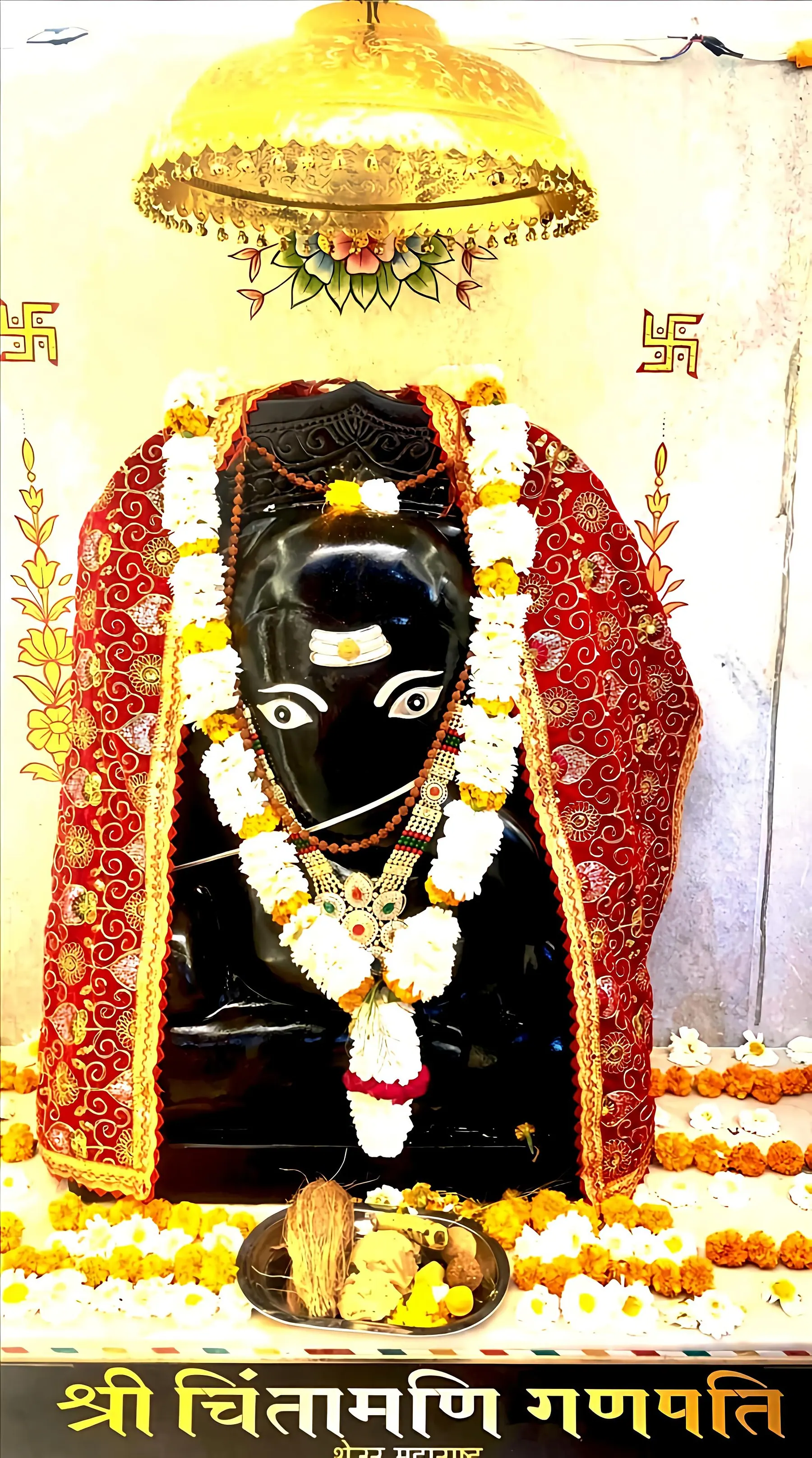
- Chintaman Ganesh: the largest Ganesha temple in the city, with a swayambhu idol and the stepwell of the Ramayana story beside it.
- Gadkalika: the Kalika shrine where the poet Kalidas is said to have received his gift.
- Sandipani Ashram: where Krishna and Balaram are held to have studied, with its painted ceiling and the Gomti Kund.
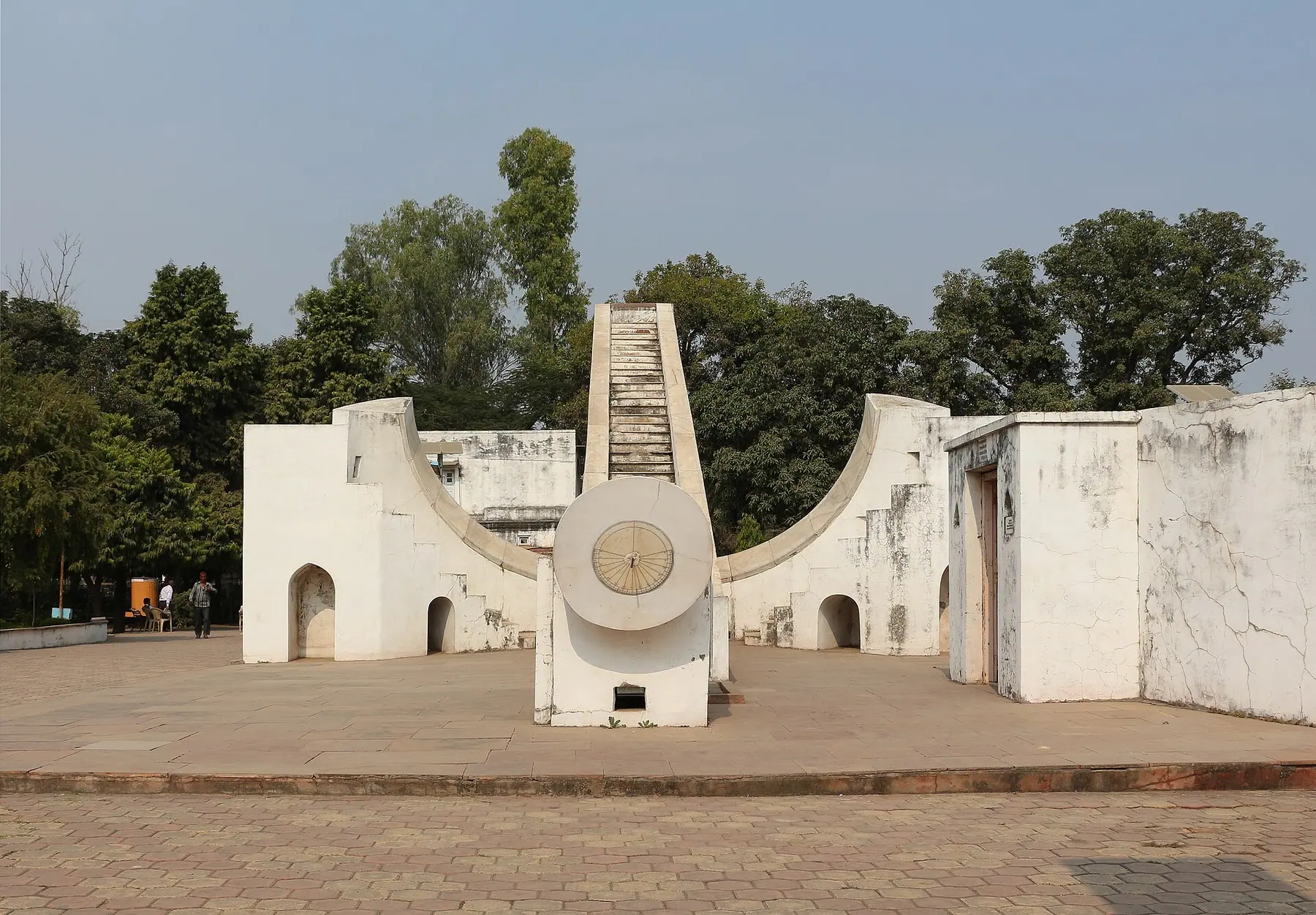
- Vedh Shala, the Jantar Mantar: the eighteenth-century observatory built by Raja Jai Singh. Its instruments are still used to compute the local almanac.
- Kaliadeh Palace: the river palace on the Shipra, with the Surya and Brahm kunds. Pleasant rather than devotional.
Roughly how far each one is
Travel guides quote distances in kilometres that contradict each other, and sometimes contradict their own other pages. Drive times are more useful anyway, so here are ours, measured from the Mahakal gates by car on an ordinary day. Treat them as approximate: the old-city lanes are the slow part, not the highway.
| Place | From Mahakaleshwar | Allow |
|---|---|---|
| Mahakal Lok, Chaubis Khamba | On foot, a few minutes | 30 to 45 minutes |
| Harsiddhi Mata | On foot, under ten minutes | 20 minutes |
| Gopal Mandir, Ram Ghat | On foot, ten to fifteen minutes | 30 minutes |
| Kal Bhairav, Bhartrihari Caves | About 15 minutes by car | 45 minutes for both |
| Mangalnath, Siddhavat | About 15 minutes by car | 30 to 45 minutes |
| Chintaman Ganesh | About 20 minutes by car | 30 minutes |
| Sandipani Ashram, Gadkalika | About 15 minutes by car | 30 minutes |
| Vedh Shala | About 10 minutes by car | 30 minutes |
| Kaliadeh Palace | About 25 minutes by car | 45 minutes |
| Omkareshwar Jyotirlinga | About 140 km, a full day out | A day of its own |
Add it up and the fifteen come to two full days of moving about, which is more than most people have. The next section is what we would cut it down to.
The six that fit one day
A first visit does not need fifteen stops. Six is what fits between a pre-dawn darshan and an evening aarti without anybody being marched: Mahakaleshwar before dawn, Harsiddhi on foot afterwards, Ram Ghat in the late morning, Kal Bhairav at midday, Chintaman Ganesh in the afternoon, Mangalnath at dusk. The order matters more than the list. It crosses the river once instead of three times.
With a second day you add Sandipani Ashram, the Vedh Shala and Gadkalika in one loop, and still have an evening free at Ram Ghat. With a third, Omkareshwar becomes possible, but it is a full day on the road, so treat it as a trip of its own rather than an afternoon.
When to come
October to March is the comfortable half of the year, and February and March are the pleasantest of those. April to June is hot enough to shorten the day. If you come then, do the temples before eleven and after five, and take an air-conditioned car rather than an auto. The monsoon fills the Shipra and makes the ghats the best they look all year, which is a real argument for July and August in spite of the rain.
Two things to check against the calendar: Shravan, when the Mondays bring crowds in the lakhs, and Mahashivratri. Both are extraordinary and neither is restful. A Simhastha year is a different proposition altogether and wants planning months out.
Questions people ask
- Can all six be done in one day?
- Comfortably, if the order is right and you start before dawn. The usual mistake is crossing the river more than once, which costs an hour in traffic.
- Is there anything here for children?
- Mahakal Lok, the Vedh Shala and Kaliadeh Palace hold their attention better than the shrines do. The observatory in particular: the instruments are large, and they work.
- What about walking? We have older people with us.
- The old-city cluster is on foot over uneven lanes, which is the hard part. Everything across the river is reached by car and parked close by. A car rather than an auto makes the difference on a hot or a cold day.
- Do we need to book anything on this list?
- Only the Bhasma Aarti, through the temple portal. Everything else here is walk-in, though hours are set by each temple and change.
Darshan hours, aarti timings, fees and booking rules are set by the temples and their committees, not by UjjainSeva, and they change. Check the temple’s own portal before you travel. Distances and drive times on this page are approximate. UjjainSeva is not a temple trust and has no official connection to any temple committee.